
This is the guiding question of the Impact Measurement and Valuation Lab (IMV-Lab), funded by the Federal Ministry of Research, Technology and Space (BMFTR). The joint research project of the University of Hamburg and LMU Munich critically develops and evaluates different approaches to impact measurement. In cooperation with social innovators, we co-create tools that support organizations in measuring their own impact.
Systematically analyze impact measurement in the field of social innovation. Publicly provide resources to increase impact transparency (on this website and via the BMFTR Platform for Social Innovations)
We define impact as changes that are
Impact measurement refers to the identification and assessment of these social and environmental changes

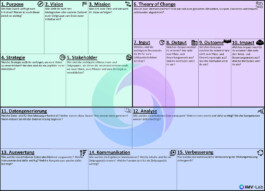
The Impact Model Canvas provides a structured yet flexible framework for making impact actionable — enabling organizations to systematically develop, reflect on, and measure their impact.
Based on 15 clearly defined steps along a prototypical impact pathway
Three phases of impact measurement:
The Impact Model Canvas is deliberately designed as a learning cycle. Insights from measurement continuously feed back into strategy and implementation, enabling organizations not only to assess impact but to actively develop it further.
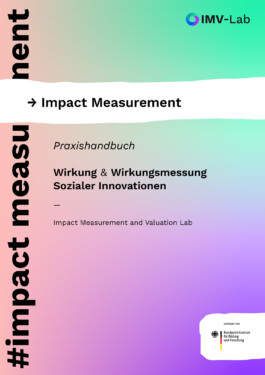
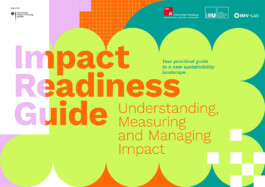
Explains why impact measurement is more than compliance, how impact can be systematically conceptualized, measured, and managed, and which tools support this process – from materiality analysis to monetary impact valuation
Addresses startups, social enterprises, SMEs, investors, foundations, as well as public and intermediary organizations that seek to use impact as a strategic steering dimension
Developed within the Impact Measurement & Valuation Lab (IMV Lab), the guide combines scientific rigor with practical applicability
The chatbot provides context-sensitive support along key questions of impact logic, impact measurement, and impact management, translating complex concepts into actionable insights
Users can decide whether the chatbot should learn from interactions or not, retaining full control over data and further development
In this way, scientifically grounded impact knowledge becomes easily accessible and directly usable for strategic decision-making
Our research explores how entrepreneurial activity can contribute to social and environmental transformation — and how these contributions can be meaningfully understood, measured, and managed.
A central focus lies on the concept of impact entrepreneurship.
Extends traditional profit-oriented entrepreneurship by explicitly integrating social and environmental goals. Entrepreneurs are understood as agents of systemic change who combine economic value creation with social and environmental purpose
Our research shows that:
A shift in perspective requires new understandings of value creation, dealing with complex trade-offs, and new forms of education, scaling, and collaboration within entrepreneurial ecosystems
It also transforms the role of research itself — from detached observation toward deeper engagement, co-creation, and translation of knowledge into practice
A second research focus concerns the measurement and valuation of entrepreneurial impact.
Our studies show that social and environmental impacts are often insufficiently captured
We examine how organizations systematically measure, communicate, and, in some cases, translate their positive and negative impacts into monetary values
Impact measurement offers major opportunities for strategic management, transparency, and accountability, but is also characterized by fragmented methodologies, missing standards, a strong focus on easily measurable outputs rather than long-term outcomes, and normative and ethical questions around monetizing social value
With regard to monetary impact valuation, we critically analyze under which conditions translating social and environmental effects into monetary values can be meaningful — and where its limits lie
Our work therefore advocates for a scientifically grounded, transparent, and ethically reflected approach to monetary impact valuation that combines quantitative methods with qualitative perspectives and considers both material and societal relevance
Social Enterprises
We pay particular attention to social enterprises that explicitly embed impact in their core mission.
Our empirical analyses show that many organizations articulate clear impact intentions but measure them only to a limited extent
Impact measurement is often selective due to resource constraints and focuses primarily on outputs
Social enterprises operate in a tension between internal mission, external stakeholder expectations, and limited capacities
Our research highlights how social enterprises navigate these demands and identifies leverage points for more robust, comparable, and effective impact measurement practices
Publications
Overall, our research aims to make impact not only measurable, but also understandable and actionable.
Rethinking entrepreneurship as part of broader societal transformation processes that combine economic performance with social justice and environmental sustainability
Edinger-Schons, L.M., Lehmann-Willenbrock, N., Hemshorn de Sánchez, C., Recker, J., Steinicke, F., Silano, F., Lopatta, K., Ringe, W.G., Aykut, S., Ruiner, C., Vogel, A., von Schweinitz, F., et al. (forthc.). Triple Transformation – Nachhaltigkeit, Digitalisierung und Kulturwandel wirkungsorientiert gestalten. Zeitschrift Führung + Organisation.
Edinger-Schons, L. M., & Stroehle, J. (2026). The Ethical Quandary of Monetary Valuation in ESG Impact Measurement. In V. Gentile, E. W. Orts, A. Rasche, & A. Strudler (Eds.), The Ethics of ESG: Critically Assessing the Environmental, Social and Governance Movement (pp. 245–267). chapter, Cambridge: Cambridge University Press.
Vogel, A., Nadegger, M., Wolf, B., Spanjol, J., Gümüşay, A. A., Edinger-Schons, L. M., Volkmann, C., Krebs, K., Bafera, J., Gebken, L., Vilchez, P., Von Schweinitz, F., Stroehle, J., Gossel, B. M., Kruse, D. J., Mirtsch, M., & Unger, V. L. (2025). Impact Entrepreneurship: Reimagining Entrepreneurial Purpose and Research for Driving Societal Impact. Schmalenbach Journal of Business Research. https://doi.org/10.1007/s41471-025-00221-w
Edinger-Schons, L. M., Stroehle, J., Gümüsay, A. A., Berg, F., Besharov, M., Busch, T., Etzion, D., Harji, K., Hsieh, N., King, A., Mayer, C., Michelon, G., Rasche, A., Reinecke, J., & Hoos, F. (2025). Monetary impact valuation for sustainable business. Nature Sustainability, 8(10), 1102–1104. https://doi.org/10.1038/s41893-025-01630-9
Stroehle, J., Gümüşay, A. A., Edinger-Schons, L. M., Vogel, A., Ebrahim, A., Rasche, A., King, A., Pucker, K., Barker, R., Reinecke, J., Michelon, G., Cooper, S., Etzion, D., Harji, K., Besharov, M., Mayer, C., Hsieh, N., & Van Den Terrell, E. (2025). A Critical Examination of Corporate Environmental and Social Impact Measurement and Valuation. Journal of Management Inquiry, 10564926251330815. https://doi.org/10.1177/10564926251330815
Edinger-Schons, L. M., Stroehle, J., Gümüsay, A. A., Berg, F., Besharov, M., Busch, T., Etzion, D., Harji, K., Hsieh, N., King, A., Mayer, C., Michelon, G., Rasche, A., Reinecke, J., & Hoos, F. (2025). Monetary impact valuation for sustainable business. Nature Sustainability, 8(10), 1102–1104. https://doi.org/10.1038/s41893-025-01630-9
von Schweinitz, F. S., Vogel, A., & Edinger-Schons, L. M. (2025). From Outputs to Outcomes: Impact Measurement Practices in Social Enterprises. Academy of Management Proceedings, 2025(1), 15221. https://doi.org/10.5465/AMPROC.2025.15221abstract
von Schweinitz, F., Reppmann, M., & Edinger-Schons, L. M. (2025). Digitalisierung messbar machen: Ansätze und Indikatoren für Politik und Verwaltung. Agora Digitale Transformation. https://doi.org/10.5281/zenodo.16964589
Vogel, A., von Schweinitz, F., Edinger-Schons, L. M., & Gümüsay, A. A.(2025). Impact Readiness Guide: Wirkung verstehen, messen und steuern. Impact Measurement and Valuation-Lab.
Von Schweinitz, F. S., & Vogel, A. (2024). Organizational Social Impact Measurement and Valuation. A Review and Critical Reflection. Academy of Management Proceedings, 2024(1), 13053. https://doi.org/10.5465/AMPROC.2024.13053abstract
von Schweinitz, F., Vogel, A., Gümüsay, A. A., & Edinger-Schons, L. M. (2023). Wirkung & Wirkungsmessung Sozialer Innovationen. Impact Measurement and Valuation-Lab.
This is the guiding question of the Impact Measurement and Valuation Lab (IMV-Lab), funded by the Federal Ministry of Research, Technology and Space (BMFTR). The joint research project of the University of Hamburg and LMU Munich critically develops and evaluates different approaches to impact measurement. In cooperation with social innovators, we co-create tools that support organizations in measuring their own impact.
Systematically analyze impact measurement in the field of social innovation. Publicly provide resources to increase impact transparency (on this website and via the BMFTR Platform for Social Innovations)
We define impact as changes that are
Impact measurement refers to the identification and assessment of these social and environmental changes
The Impact Model Canvas provides a structured yet flexible framework for making impact actionable — enabling organizations to systematically develop, reflect on, and measure their impact.
Based on 15 clearly defined steps along a prototypical impact pathway
Three phases of impact measurement:
The Impact Model Canvas is deliberately designed as a learning cycle. Insights from measurement continuously feed back into strategy and implementation, enabling organizations not only to assess impact but to actively develop it further.
Explains why impact measurement is more than compliance, how impact can be systematically conceptualized, measured, and managed, and which tools support this process – from materiality analysis to monetary impact valuation
Addresses startups, social enterprises, SMEs, investors, foundations, as well as public and intermediary organizations that seek to use impact as a strategic steering dimension
Developed within the Impact Measurement & Valuation Lab (IMV Lab), the guide combines scientific rigor with practical applicability
The chatbot provides context-sensitive support along key questions of impact logic, impact measurement, and impact management, translating complex concepts into actionable insights
Users can decide whether the chatbot should learn from interactions or not, retaining full control over data and further development
In this way, scientifically grounded impact knowledge becomes easily accessible and directly usable for strategic decision-making
Our research explores how entrepreneurial activity can contribute to social and environmental transformation — and how these contributions can be meaningfully understood, measured, and managed.
A central focus lies on the concept of impact entrepreneurship.
Extends traditional profit-oriented entrepreneurship by explicitly integrating social and environmental goals. Entrepreneurs are understood as agents of systemic change who combine economic value creation with social and environmental purpose
Our research shows that:
A shift in perspective requires new understandings of value creation, dealing with complex trade-offs, and new forms of education, scaling, and collaboration within entrepreneurial ecosystems
It also transforms the role of research itself — from detached observation toward deeper engagement, co-creation, and translation of knowledge into practice
A second research focus concerns the measurement and valuation of entrepreneurial impact.
Our studies show that social and environmental impacts are often insufficiently captured
We examine how organizations systematically measure, communicate, and, in some cases, translate their positive and negative impacts into monetary values
Impact measurement offers major opportunities for strategic management, transparency, and accountability, but is also characterized by fragmented methodologies, missing standards, a strong focus on easily measurable outputs rather than long-term outcomes, and normative and ethical questions around monetizing social value
With regard to monetary impact valuation, we critically analyze under which conditions translating social and environmental effects into monetary values can be meaningful — and where its limits lie
Our work therefore advocates for a scientifically grounded, transparent, and ethically reflected approach to monetary impact valuation that combines quantitative methods with qualitative perspectives and considers both material and societal relevance
Social Enterprises
We pay particular attention to social enterprises that explicitly embed impact in their core mission.
Our empirical analyses show that many organizations articulate clear impact intentions but measure them only to a limited extent
Impact measurement is often selective due to resource constraints and focuses primarily on outputs
Social enterprises operate in a tension between internal mission, external stakeholder expectations, and limited capacities
Our research highlights how social enterprises navigate these demands and identifies leverage points for more robust, comparable, and effective impact measurement practices
Publications
Overall, our research aims to make impact not only measurable, but also understandable and actionable.
Rethinking entrepreneurship as part of broader societal transformation processes that combine economic performance with social justice and environmental sustainability
Edinger-Schons, L.M., Lehmann-Willenbrock, N., Hemshorn de Sánchez, C., Recker, J., Steinicke, F., Silano, F., Lopatta, K., Ringe, W.G., Aykut, S., Ruiner, C., Vogel, A., von Schweinitz, F., et al. (forthc.). Triple Transformation – Nachhaltigkeit, Digitalisierung und Kulturwandel wirkungsorientiert gestalten. Zeitschrift Führung + Organisation.
Edinger-Schons, L. M., & Stroehle, J. (2026). The Ethical Quandary of Monetary Valuation in ESG Impact Measurement. In V. Gentile, E. W. Orts, A. Rasche, & A. Strudler (Eds.), The Ethics of ESG: Critically Assessing the Environmental, Social and Governance Movement (pp. 245–267). chapter, Cambridge: Cambridge University Press.
Vogel, A., Nadegger, M., Wolf, B., Spanjol, J., Gümüşay, A. A., Edinger-Schons, L. M., Volkmann, C., Krebs, K., Bafera, J., Gebken, L., Vilchez, P., Von Schweinitz, F., Stroehle, J., Gossel, B. M., Kruse, D. J., Mirtsch, M., & Unger, V. L. (2025). Impact Entrepreneurship: Reimagining Entrepreneurial Purpose and Research for Driving Societal Impact. Schmalenbach Journal of Business Research. https://doi.org/10.1007/s41471-025-00221-w
Edinger-Schons, L. M., Stroehle, J., Gümüsay, A. A., Berg, F., Besharov, M., Busch, T., Etzion, D., Harji, K., Hsieh, N., King, A., Mayer, C., Michelon, G., Rasche, A., Reinecke, J., & Hoos, F. (2025). Monetary impact valuation for sustainable business. Nature Sustainability, 8(10), 1102–1104. https://doi.org/10.1038/s41893-025-01630-9
Stroehle, J., Gümüşay, A. A., Edinger-Schons, L. M., Vogel, A., Ebrahim, A., Rasche, A., King, A., Pucker, K., Barker, R., Reinecke, J., Michelon, G., Cooper, S., Etzion, D., Harji, K., Besharov, M., Mayer, C., Hsieh, N., & Van Den Terrell, E. (2025). A Critical Examination of Corporate Environmental and Social Impact Measurement and Valuation. Journal of Management Inquiry, 10564926251330815. https://doi.org/10.1177/10564926251330815
Edinger-Schons, L. M., Stroehle, J., Gümüsay, A. A., Berg, F., Besharov, M., Busch, T., Etzion, D., Harji, K., Hsieh, N., King, A., Mayer, C., Michelon, G., Rasche, A., Reinecke, J., & Hoos, F. (2025). Monetary impact valuation for sustainable business. Nature Sustainability, 8(10), 1102–1104. https://doi.org/10.1038/s41893-025-01630-9
von Schweinitz, F. S., Vogel, A., & Edinger-Schons, L. M. (2025). From Outputs to Outcomes: Impact Measurement Practices in Social Enterprises. Academy of Management Proceedings, 2025(1), 15221. https://doi.org/10.5465/AMPROC.2025.15221abstract
von Schweinitz, F., Reppmann, M., & Edinger-Schons, L. M. (2025). Digitalisierung messbar machen: Ansätze und Indikatoren für Politik und Verwaltung. Agora Digitale Transformation. https://doi.org/10.5281/zenodo.16964589
Vogel, A., von Schweinitz, F., Edinger-Schons, L. M., & Gümüsay, A. A.(2025). Impact Readiness Guide: Wirkung verstehen, messen und steuern. Impact Measurement and Valuation-Lab.
Von Schweinitz, F. S., & Vogel, A. (2024). Organizational Social Impact Measurement and Valuation. A Review and Critical Reflection. Academy of Management Proceedings, 2024(1), 13053. https://doi.org/10.5465/AMPROC.2024.13053abstract
von Schweinitz, F., Vogel, A., Gümüsay, A. A., & Edinger-Schons, L. M. (2023). Wirkung & Wirkungsmessung Sozialer Innovationen. Impact Measurement and Valuation-Lab.